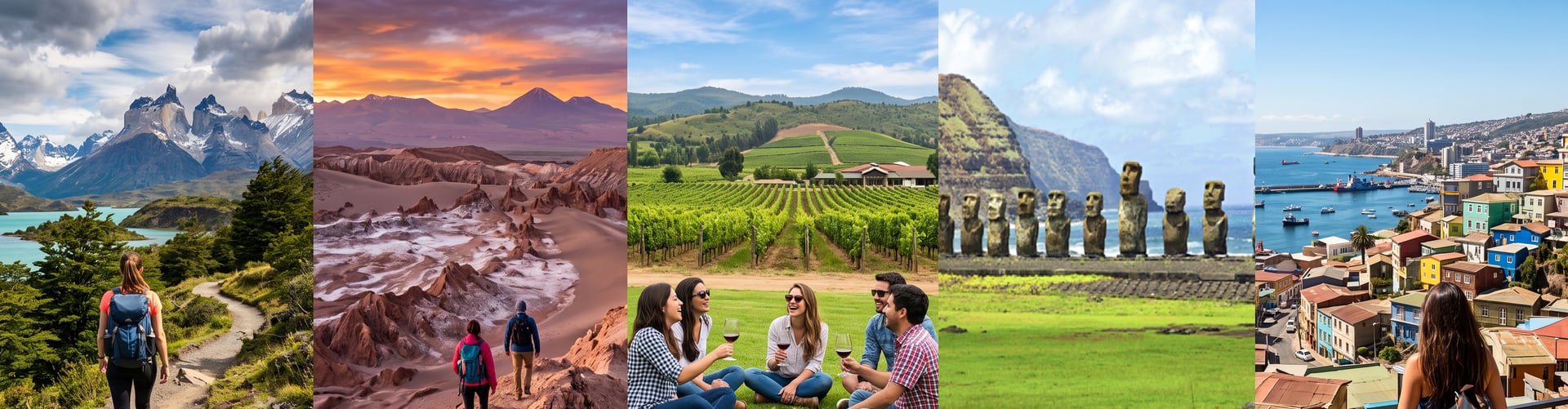
Chile runs nearly 4,300 kilometers from north to south, which means the country contains an extraordinary range of climates and landscapes within a single destination. The Atacama Desert in the north is one of the driest places on earth. The Lake District in the center offers forests and volcanoes. Patagonia in the south draws hikers from around the world. In between, a string of wine valleys and coastal cities adds further depth to the itinerary.
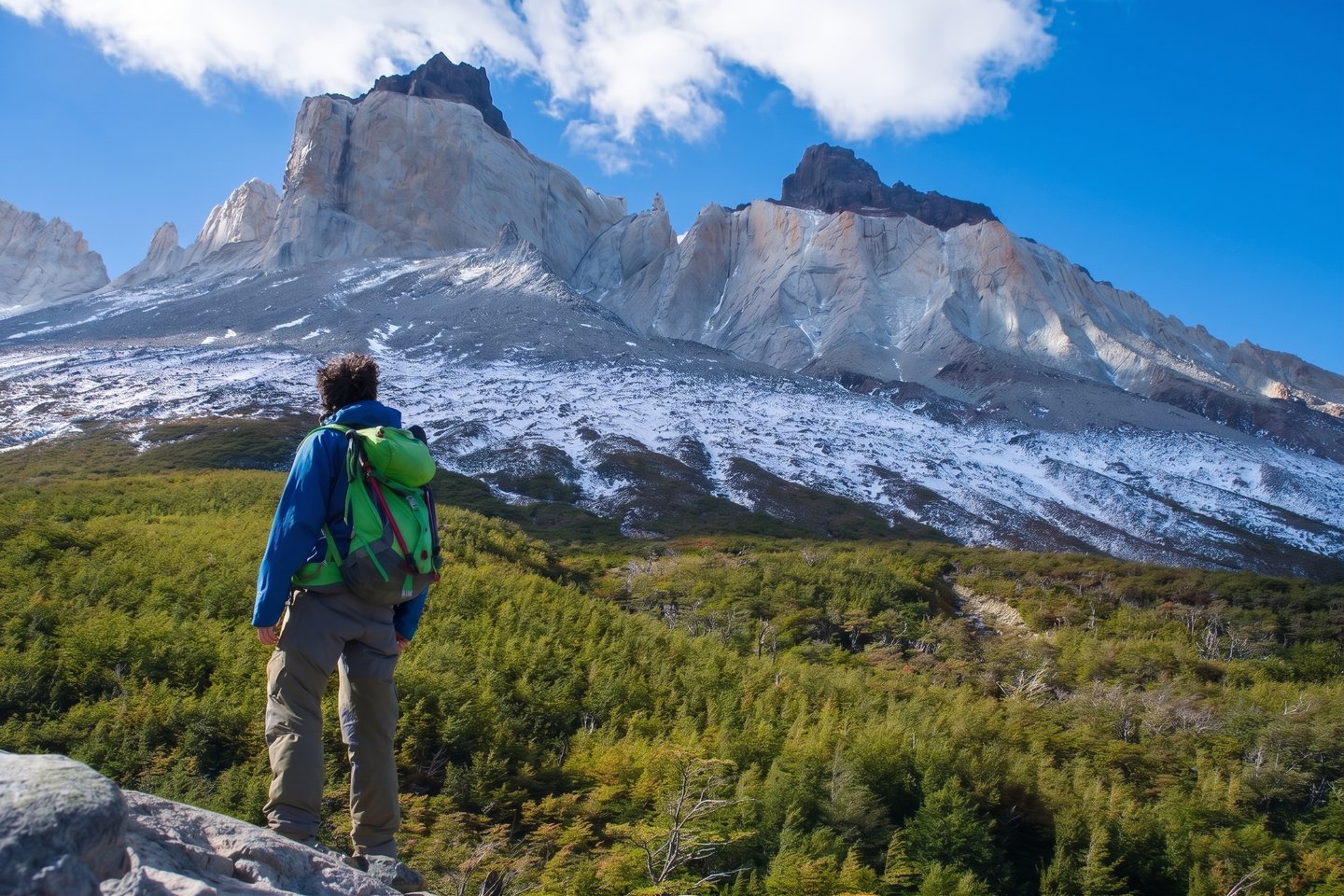
Torres del Paine National Park in Chilean Patagonia is one of South America's most iconic trekking destinations. Its granite towers, turquoise lakes, and sprawling glaciers draw travelers willing to make the long journey south. The W Trek and the full Circuit are the two main hiking routes, ranging from four to nine days, with well-placed refugios and campsites making the logistics manageable for most fit travelers.
Patagonia - Torres del Paine
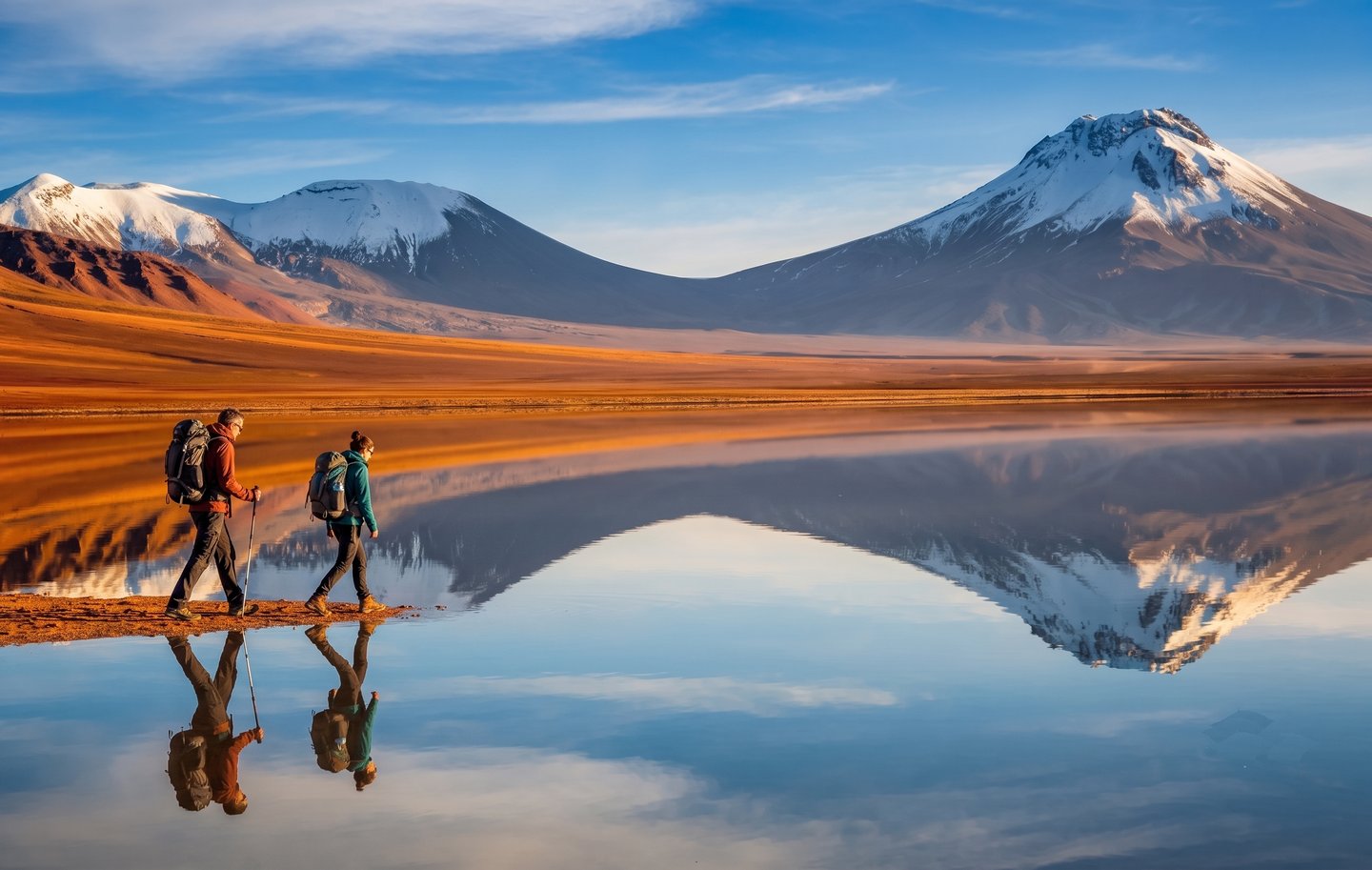
The Atacama sits at high altitude in northern Chile and is considered the driest non-polar desert on earth. Its landscapes include salt flats, geysers, volcanic peaks, and lagoons colored by algae and minerals. The town of San Pedro de Atacama serves as the main base, with day trips available in every direction. The region also offers some of the world's clearest night skies, making it a premier destination for stargazing.
Atacama Desert
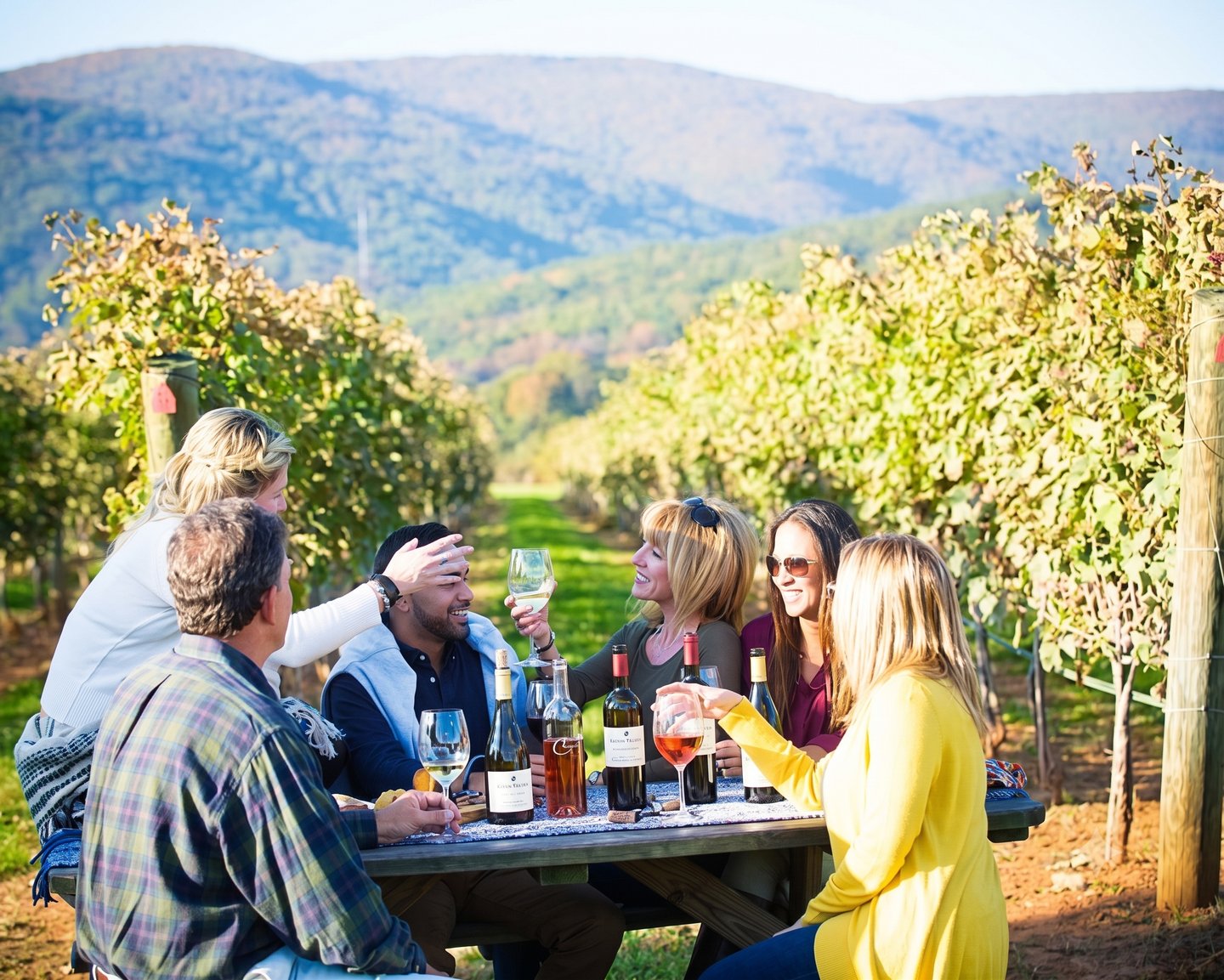
Chile's wine valleys are among the most accessible in South America, with the main growing regions within easy reach of Santiago. The Maipo Valley, just south of the capital, is the historic heart of Chilean wine and produces some of the country's best Cabernet Sauvignon. Casablanca, closer to the coast, is cooler and better suited to white varieties like Sauvignon Blanc and Chardonnay. Both valleys combine well into a single day trip, and several wineries offer tastings, cellar tours, and lunch with vineyard views.